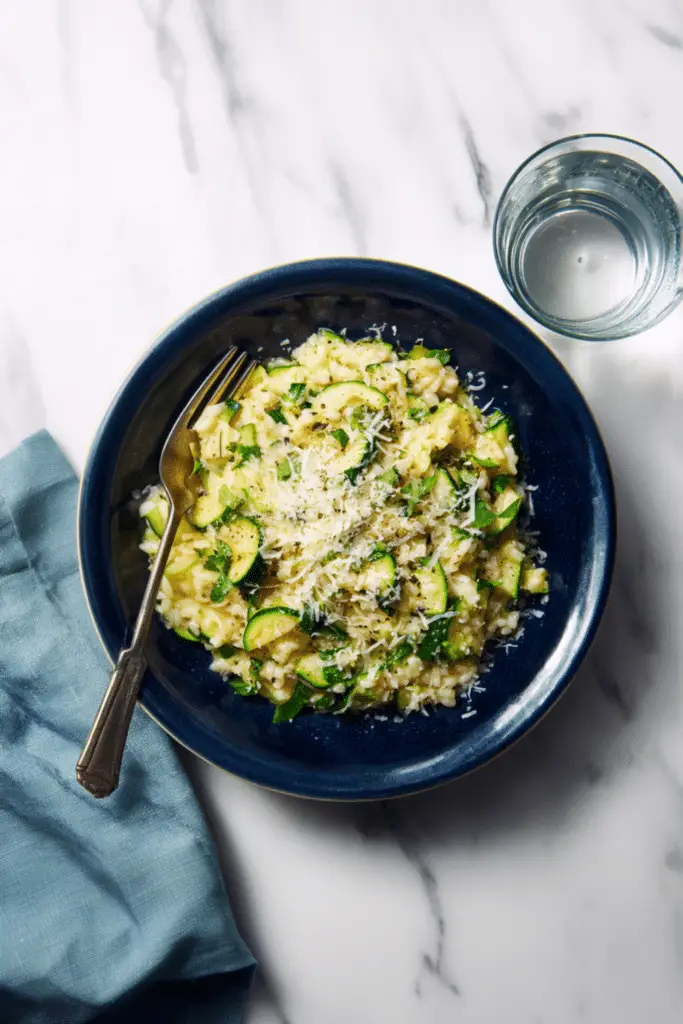
Spring Vegetable Risotto is the ultimate way to celebrate the shift from cozy winter meals to fresh, vibrant spring cooking. Creamy, comforting, and packed with seasonal produce, this dish combines tender asparagus, sweet peas, zucchini, and yellow squash with rich Arborio rice for a beautifully balanced meal. Whether you’re looking for a satisfying meatless dinner or an elegant side dish, Spring Vegetable Risotto delivers restaurant-quality flavor with simple pantry ingredients and a little mindful stirring.
This classic Italian-inspired rice dish feels indulgent, yet the burst of green vegetables keeps it light and refreshing. If you’ve ever been intimidated by homemade risotto, you’ll be happy to know that this Spring Vegetable Risotto is straightforward, approachable, and absolutely worth the effort.
Why You’ll Love This Spring Vegetable Risotto
Spring Vegetable Risotto stands out because it perfectly balances creamy texture with bright, seasonal flavors. The slow addition of warm vegetable stock releases the rice’s natural starches, creating that signature velvety consistency without heavy cream.
Here’s why this recipe works so well:
- It highlights fresh spring vegetables like asparagus and peas.
- It’s naturally vegetarian and easy to adapt.
- The combination of white wine, Parmesan cheese, and butter adds depth.
- It can be served as a main dish or paired with protein.
- It feels elegant enough for entertaining but simple enough for weeknights.
Unlike heavier winter risottos, this version feels fresh and colorful. The tender-crisp vegetables contrast beautifully with the creamy rice, making every bite of Spring Vegetable Risotto both comforting and lively.
Ingredients for the Best Spring Vegetable Risotto
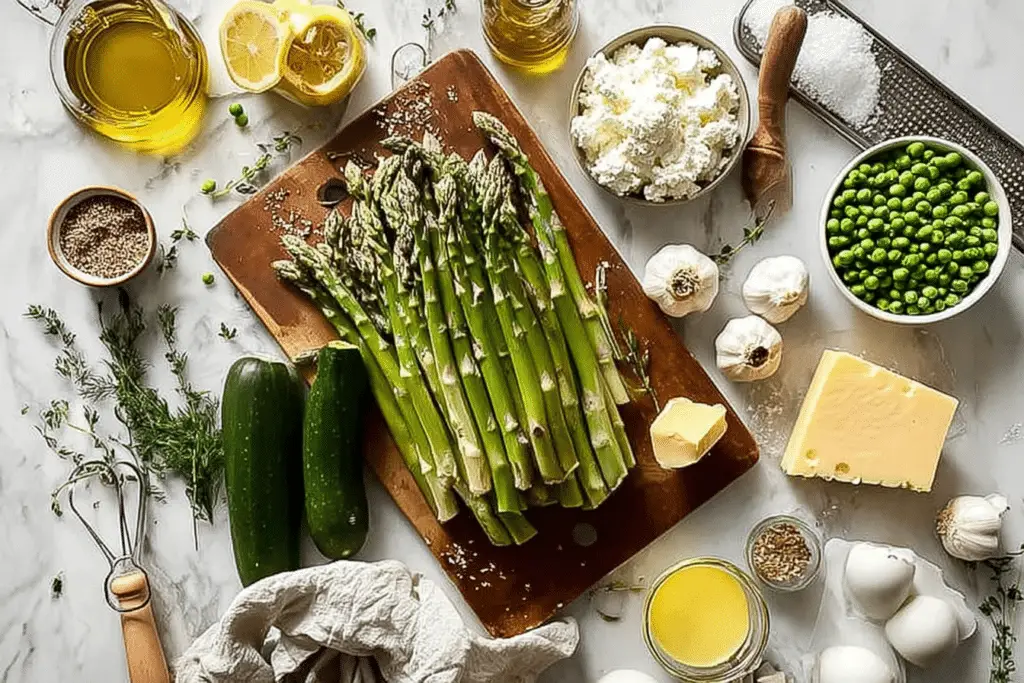
Below are the core ingredients that give Spring Vegetable Risotto its signature flavor and texture.
• Vegetable stock: Forms the base of the risotto and infuses the rice with savory depth. Always use it warm.
• Olive oil: Sautés the aromatics and builds the flavor foundation.
• Yellow onion: Adds sweetness and aromatic depth.
• Salt: Enhances all the flavors throughout cooking.
• Red pepper flakes: Optional, but adds gentle warmth.
• Garlic: Brings bold, savory flavor to the base.
• Arborio rice: Essential for creamy risotto thanks to its high starch content.
• Dry white wine: Deglazes the pan and adds brightness and complexity.
• Asparagus: A quintessential spring vegetable that adds freshness and texture.
• Zucchini: Contributes mild flavor and soft bite.
• Yellow squash: Adds color and subtle sweetness.
• Peas (fresh or frozen): Provide pops of sweetness and vibrant green color.
• Unsalted butter: Creates a silky finish and extra richness.
• Parmesan cheese: Adds salty, nutty depth and enhances creaminess.
• Fresh parsley: Optional garnish for brightness.
• Lemon juice: Optional finishing touch to brighten the entire dish.
Ingredient Swaps and Variations
Spring Vegetable Risotto is flexible and easy to customize:
- Replace zucchini and yellow squash with spinach or baby kale for a leafy variation.
- Use leeks instead of onion for a milder flavor.
- Substitute Pecorino Romano for Parmesan for a sharper finish.
- Skip the white wine and use extra vegetable stock plus a splash of lemon juice.
- Add mushrooms for an earthy twist on this spring risotto recipe.
These variations keep the spirit of Spring Vegetable Risotto intact while adapting it to your pantry or dietary needs.
How to Make Spring Vegetable Risotto Step by Step
- Warm the vegetable stock in a saucepan over medium heat. Once it reaches a gentle simmer, reduce the heat to low and keep it warm. Adding warm stock is crucial for achieving a creamy texture.
- In a large Dutch oven or heavy-bottomed pan, heat the olive oil over medium heat. Add the diced onion with a generous pinch of salt and red pepper flakes. Sauté for about 1 minute, then add the garlic and cook for another 2 minutes until fragrant.
- Stir in the Arborio rice, coating it thoroughly in the oil and aromatics. Toast the rice for about 1 minute. This step enhances the nutty flavor and prepares the grains to absorb liquid evenly.
- Deglaze the pan with dry white wine, stirring continuously. Allow the rice to absorb the wine fully before moving on. This builds depth in your Spring Vegetable Risotto.
- Add about 1/2 cup of warm vegetable stock to the rice. Stir every 30 to 60 seconds until the liquid is absorbed. The stirring encourages starch release, creating the creamy consistency risotto is known for.
- Continue adding stock in 1/2 cup increments, stirring and waiting until each addition is absorbed before adding more. After about 4 cups of stock have been used, add the asparagus, zucchini, yellow squash, and peas to the remaining broth to begin softening them.
- Keep adding broth gradually, transferring vegetables into the risotto as you stir. The vegetables will cook gently in the broth and finish cooking in the rice.
- Begin tasting the rice as you approach the final additions of stock. The grains should be creamy but still slightly firm in the center, similar to al dente pasta.
- Once the Spring Vegetable Risotto reaches a creamy consistency and the rice is tender yet firm, stop adding liquid. Turn off the heat.
- Stir in the butter and freshly grated Parmesan cheese. Mix until fully melted and incorporated. Taste and adjust salt if needed.
- Finish with chopped parsley, extra Parmesan, and a squeeze of fresh lemon juice if desired. Serve immediately for the best texture.
Tips for Perfect Spring Vegetable Risotto
Making Spring Vegetable Risotto is more about technique than difficulty. Keep these tips in mind:
Use warm stock only. Cold liquid interrupts the cooking process and affects texture.
Stir consistently but not frantically. Gentle, steady stirring is enough to release starch.
Taste frequently near the end. The difference between al dente and overcooked can happen quickly.
Do not rinse the Arborio rice. You need the starch for creaminess.
Serve immediately. Risotto thickens as it sits, so enjoy your Spring Vegetable Risotto right away.
If you have leftovers, store them in an airtight container in the refrigerator for up to three days. Reheat gently with a splash of stock or water to loosen the texture.
Pairing Ideas and Flavor Variations
Spring Vegetable Risotto is satisfying on its own, but it also pairs beautifully with other dishes.
Serve it alongside grilled chicken or steak for a complete meal.
Pair it with seared scallops or grilled shrimp for a seafood twist.
Add baked salmon for a protein-rich dinner that complements the creamy rice.
For extra vegetables, serve with roasted broccolini or a crisp spring salad.
If you want to elevate your Spring Vegetable Risotto further, try stirring in a spoonful of mascarpone cheese for added richness. For a brighter finish, increase the lemon juice slightly. You can also top it with toasted pine nuts for crunch.
This vegetable risotto recipe also works as a side dish for holiday meals or spring gatherings. Its vibrant green colors make it visually stunning on the table.
The Seasonal Appeal of Spring Vegetable Risotto
One of the reasons Spring Vegetable Risotto is so beloved is its celebration of seasonal produce. Asparagus and peas are at their peak during spring, offering optimal sweetness and texture. Zucchini and yellow squash add softness and visual contrast.
Seasonal cooking not only enhances flavor but also ensures better nutritional value. This Spring Vegetable Risotto provides fiber, vitamins A and C, and plant-based protein from peas and rice. While it feels indulgent thanks to butter and Parmesan, the abundance of vegetables keeps it balanced.
Cooking with the seasons also encourages variety in your meals. This spring risotto recipe is a wonderful way to break free from heavier winter comfort foods while still enjoying a creamy, satisfying dish.
Frequently Asked Questions About Spring Vegetable Risotto
Can I make Spring Vegetable Risotto ahead of time?
Risotto is best served fresh. However, you can partially cook it, stopping just before the final additions of stock. Finish cooking with warm broth just before serving.
Can I freeze it?
Freezing is not ideal because the creamy texture may become grainy upon reheating.
Is Spring Vegetable Risotto gluten-free?
Yes, as long as your vegetable stock and Parmesan are certified gluten-free.
Can I make it vegan?
Absolutely. Replace butter with plant-based butter and use nutritional yeast or vegan Parmesan in place of cheese.
Final Thoughts on Making Spring Vegetable Risotto
Spring Vegetable Risotto proves that simple ingredients and thoughtful technique can create something truly special. The creamy Arborio rice, tender seasonal vegetables, and savory Parmesan come together in a dish that feels both comforting and fresh.
Whether you’re preparing a weeknight dinner, hosting friends, or simply craving a bowl of creamy vegetable risotto, this recipe offers dependable results and impressive flavor. With each spoonful, you’ll taste the balance of richness and brightness that makes Spring Vegetable Risotto a timeless spring favorite.
Conclusion: Why Spring Vegetable Risotto Deserves a Spot on Your Table
Spring Vegetable Risotto is more than just a comforting rice dish; it’s a celebration of seasonal produce, simple technique, and balanced flavor. The creamy Arborio rice, tender asparagus, sweet peas, and delicate squash create a harmony that feels both indulgent and fresh. Each bite delivers richness from Parmesan and butter while bright vegetables keep the dish light and vibrant.
What makes Spring Vegetable Risotto truly special is its versatility. It works as a satisfying vegetarian main course, an elegant side dish for seafood or grilled meats, or a standout option for spring gatherings. With just a bit of patience and mindful stirring, you can transform basic pantry ingredients into a restaurant-worthy meal.
If you’ve been hesitant to try making risotto at home, this is the perfect place to start. Once you master the technique, Spring Vegetable Risotto will quickly become one of your favorite seasonal comfort foods.
Frequently Asked Questions About Spring Vegetable Risotto
Can I make Spring Vegetable Risotto without wine?
Yes, you can prepare Spring Vegetable Risotto without white wine. Simply substitute the wine with additional warm vegetable stock and add a small splash of fresh lemon juice to maintain brightness and depth. The risotto will still be creamy and flavorful.
What is the best rice for Spring Vegetable Risotto?
Arborio rice is the best choice for Spring Vegetable Risotto because of its high starch content, which creates the signature creamy texture. Carnaroli or Vialone Nano are also excellent alternatives if available, as they provide a similarly rich consistency.
How do I store and reheat leftover Spring Vegetable Risotto?
Store leftover Spring Vegetable Risotto in an airtight container in the refrigerator for up to three days. When reheating, add a splash of vegetable stock or water and warm it gently over low heat, stirring frequently to restore its creamy texture. Avoid overheating, as it can make the rice mushy.
Can I add protein to Spring Vegetable Risotto?
Absolutely. While Spring Vegetable Risotto is satisfying on its own, you can easily add grilled chicken, seared shrimp, scallops, or baked salmon for extra protein. For a vegetarian boost, stir in white beans or top with toasted pine nuts for added texture and flavor.
More Relevant Recipes
- Easy Lemon Chicken Orzo Soup Recipe
- Easy Spring Pea and Mint Pasta Salad
- Easy Lemon Herb Roasted Chicken Breast Recipe
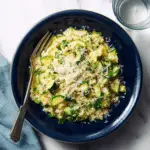
Creamy Spring Vegetable Risotto with Asparagus & Peas
- Total Time: 1 hour
- Yield: 6 servings 1x
- Diet: Vegetarian
Description
Spring Vegetable Risotto is a creamy, comforting Italian rice dish made with Arborio rice, fresh asparagus, peas, zucchini, and yellow squash. Finished with Parmesan cheese, butter, and a touch of lemon, this seasonal recipe is perfect as a vegetarian main course or an elegant side dish for spring gatherings.
Ingredients
- 6 cups vegetable stock
- 1/4 cup olive oil
- 1 cup yellow onion, diced
- Salt, to taste
- Dash red pepper flakes (optional)
- 2 cloves garlic, minced
- 2 cups Arborio rice
- 1/2 cup dry white wine
- 1/2 pound asparagus spears, cut into 1-inch pieces
- 1 cup zucchini, diced
- 1 cup yellow squash, diced
- 1 cup peas (fresh or frozen)
- 4 tablespoons unsalted butter
- 1 cup Parmesan cheese, freshly grated
- Fresh parsley, chopped (optional)
- Fresh lemon juice, to taste (optional)
Instructions
- In a medium saucepan, bring the vegetable stock to a gentle simmer, then reduce heat and keep warm over low heat.
- Heat olive oil in a large Dutch oven over medium heat. Add diced onion, salt, and red pepper flakes. Sauté for 1 minute, then add garlic and cook for 2 more minutes until fragrant.
- Add Arborio rice to the pan and stir to coat. Toast for about 1 minute until lightly fragrant.
- Pour in the white wine, stirring continuously until fully absorbed.
- Add 1/2 cup of warm vegetable stock to the rice. Stir every 30–60 seconds until the liquid is absorbed.
- Continue adding stock in 1/2 cup increments, stirring and allowing each addition to absorb before adding more.
- After about 4 cups of stock have been added, stir in asparagus, zucchini, yellow squash, and peas. Continue adding stock gradually, stirring frequently.
- Taste the rice as it cooks. When it is creamy and tender with a slight al dente bite, stop adding liquid.
- Remove from heat and stir in butter and Parmesan cheese until fully melted and creamy.
- Adjust seasoning with salt and lemon juice if desired. Garnish with parsley and serve immediately.
Notes
- Always use warm stock to maintain even cooking and achieve a creamy texture.
- Do not rinse Arborio rice, as the starch is essential for creaminess.
- Stir consistently but gently to release starch without overworking the rice.
- Risotto is best served immediately, as it thickens upon standing.
- Reheat leftovers with a splash of stock or water to restore creaminess.
- Prep Time: 15 minutes
- Cook Time: 45 minutes
- Category: Main Course
- Method: Stovetop
- Cuisine: Italian
Nutrition
- Serving Size: 1 serving
- Calories: 538 kcal
- Sugar: 5 g
- Sodium: 1214 mg
- Fat: 25 g
- Saturated Fat: 11 g
- Unsaturated Fat: 12 g
- Trans Fat: 1 g
- Carbohydrates: 62 g
- Fiber: 4 g
- Protein: 12 g
- Cholesterol: 41 mg
Keywords: Spring Vegetable Risotto, creamy risotto, asparagus risotto, pea risotto, vegetarian risotto, Italian rice dish, seasonal spring recipe